

Tooth pain has a way of showing up at the worst possible time - and an even worse habit of being ignored until it can't be anymore. Most people wait far too long before getting a persistent toothache checked, usually because "root canal" sounds a lot scarier than it actually is. The truth is, catching …

Estimated reading time: 7 minutes
Tooth pain has a way of showing up at the worst possible time – and an even worse habit of being ignored until it can’t be anymore. Most people wait far too long before getting a persistent toothache checked, usually because “root canal” sounds a lot scarier than it actually is.
The truth is, catching the problem early is what makes root canal treatment straightforward. Left unchecked, the same issue can turn into a much bigger, more painful, and more complicated procedure. Here are five signs that it’s time to get it looked at, plus how we diagnose it at Ashtead Dental.
What Actually Happens Inside a Tooth
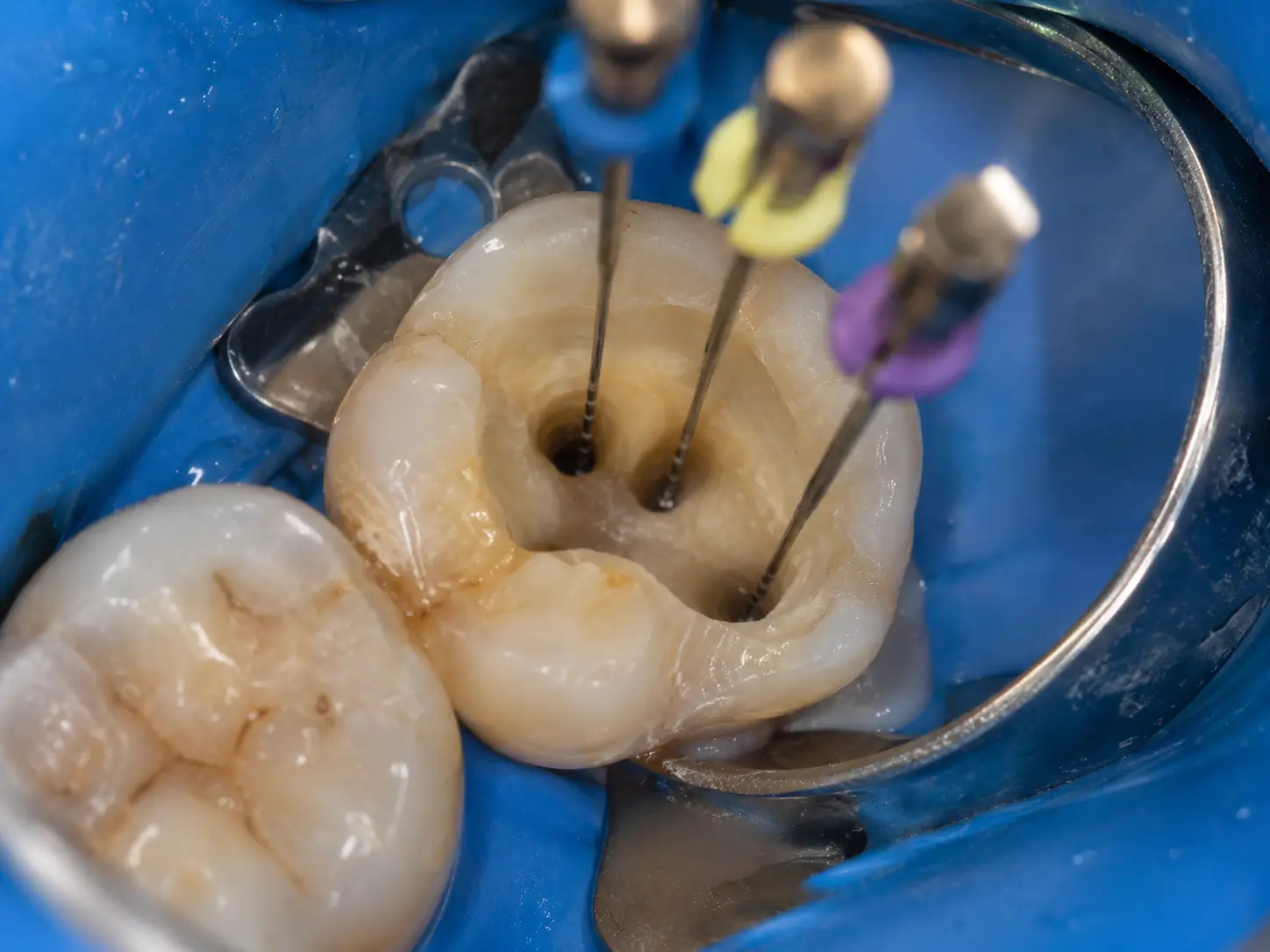
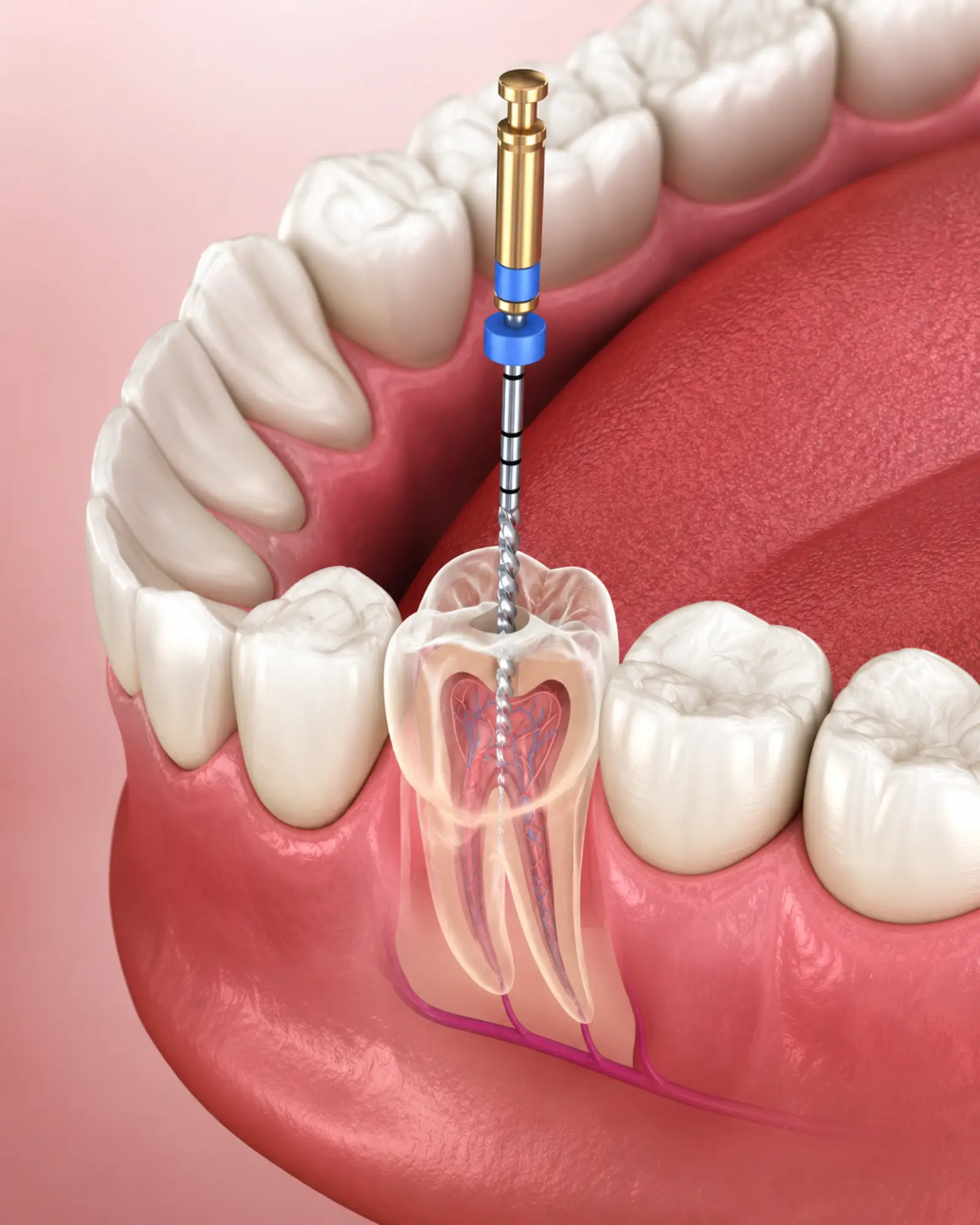
Every tooth has a soft core called the pulp, made up of nerves, blood vessels and connective tissue. It sits underneath the enamel and dentine, protected – until decay, a crack, a deep filling, or repeated dental work over the years lets bacteria reach it. Once that happens, the pulp can become infected or inflamed, and unlike skin or bone, it can’t heal itself. The infection tends to stay contained inside the tooth, quietly getting worse, until it either flares up as pain or starts affecting the tissue around the root.
This is also why root canal treatment is sometimes needed even in a tooth that looks perfectly fine from the outside. The enamel can be intact while the pulp underneath is already compromised, which is part of why symptoms – not appearance – are usually the first real clue something’s wrong.
Root canal treatment removes the infected pulp, cleans out the canal, and seals the tooth so it can keep doing its job without the source of infection still inside it. It doesn’t remove the tooth – it saves it. That distinction matters, because the alternative, once a tooth is too far gone to save, is extraction – and replacing a missing tooth is almost always a longer and more involved process than treating the one you still have.
5 Signs You Might Need Root Canal Treatment
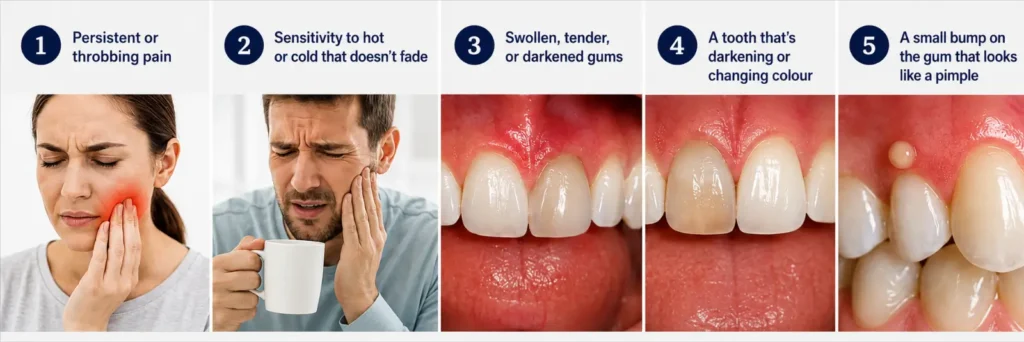
1 Persistent or throbbing pain
Occasional sensitivity is normal. Pain that lingers for hours, wakes you up at night, or throbs on its own without anything touching the tooth is different – that’s often a sign the pulp inside is inflamed or infected, not just irritated.
2 Sensitivity to hot or cold that doesn’t fade
A quick twinge from ice cream or hot tea that disappears in a few seconds usually isn’t cause for concern. But if the sensitivity lingers well after the hot or cold is gone – sometimes for a minute or more – it can point to nerve damage inside the tooth.
3 Swollen, tender, or darkened gums near the tooth
Infection doesn’t always stay contained inside the tooth. It can spread to the surrounding gum tissue, causing swelling, tenderness, or a change in colour around the base of the tooth. This is your body signalling that something underneath needs attention.
4 A tooth that’s darkening or changing colour
A tooth that’s turning grey, yellow, or noticeably darker than the teeth around it can mean the internal tissue is dying, often after an injury or untreated decay. The outside can look fine while the inside is already compromised – colour change is frequently the only visible clue.
5 A small bump on the gum that looks like a pimple
Known as a gum boil or fistula, this is a channel your body creates to drain infection from the root of the tooth. It might come and go, and it might not even hurt – but its presence usually means there’s an active infection that needs treating, not just monitoring.
If any of these sound familiar, it’s worth getting the tooth assessed rather than waiting to see if it settles down on its own. Infections inside a tooth don’t resolve by themselves.
Why “Root Canal” Sounds Worse Than It Is
Root canal treatment has one of the worst reputations in dentistry, mostly built on stories from decades ago rather than how the procedure is actually carried out today. Modern anaesthetic, better instruments, and more precise imaging mean the appointment itself is generally no more uncomfortable than having a filling.
What actually causes the pain people associate with root canals is the infection before treatment – not the treatment itself. Numbing the area and removing the source of the infection is usually what brings relief, not what causes discomfort. Delaying treatment out of fear of the procedure tends to prolong the very pain people are trying to avoid.
How We Diagnose It at Ashtead Dental
Not every one of these symptoms means you definitely need a root canal – and that’s exactly why an accurate diagnosis matters more than guesswork.
At Ashtead Dental, we use a Planmeca ProMax 3D CBCT scanner to get a detailed three-dimensional view of the tooth, its root structure, and the surrounding bone – something a standard two-dimensional X-ray can’t fully show. This lets us see exactly where an infection sits, whether it’s affecting nearby structures, and whether root canal treatment is genuinely the right next step, before any treatment begins. It also uses less radiation than conventional imaging, so you get a clearer picture without a bigger dose.
That level of clarity means less back-and-forth, fewer surprises mid-treatment, and a plan built around what’s actually happening inside your tooth – not just the symptoms on the surface.
What Happens If You Leave It
It’s tempting to wait out tooth pain, especially if it comes and goes – pain that fades can feel like the problem has sorted itself out. It hasn’t. An infection inside a tooth doesn’t heal on its own – antibiotics can sometimes calm the symptoms down temporarily, but they don’t resolve the underlying problem, and the infection is usually still there once the course finishes.
Left untreated, the infection can spread further into the surrounding bone and tissue, become significantly more painful, and in some cases put the tooth beyond saving, meaning extraction becomes the only remaining option. In rarer cases, an untreated dental infection can spread beyond the tooth and jaw entirely, which is a genuine medical concern, not just a dental one.
None of this is to cause alarm – it’s simply why “it’s stopped hurting so it must be fine” is one of the most common and costly assumptions people make about tooth pain. Catching it early is almost always simpler, less invasive, and less disruptive, both for the tooth and for you.
What to Expect If You Need Treatment
Root canal treatment has a reputation that doesn’t really match the experience anymore. In broad terms, it involves.
- Numbing the area so the procedure is comfortable
- Removing the infected or inflamed pulp from inside the tooth
- Cleaning and shaping the canal thoroughly
- Sealing it to prevent further infection
- In most cases, fitting a crown afterwards to protect and restore the tooth long-term
Most patients describe it as feeling similar to having a filling done – the anxiety beforehand is usually worse than the appointment itself.
FAQs
Can I just have the tooth taken out instead?
Sometimes extraction is the right call, but a natural tooth – even one that’s been treated – generally does a better job than a replacement, and keeps neighbouring teeth from shifting out of position. Root canal treatment is usually recommended as the first option where the tooth can realistically be saved.
Will I be in pain during recovery?
Some tenderness for a few days afterwards is normal, similar to recovering from a filling, and is usually manageable without anything stronger than over-the-counter pain relief. It’s a different experience to the pain that brought you in, which is often the point people find reassuring.
How do I know if it’s actually a root canal issue or just sensitivity?
That’s exactly what an assessment is for. Sensitivity that fades quickly, general soreness after dental work, or reaction to very cold food are often nothing to worry about. The signs above – lingering pain, throbbing, swelling, colour change, or a gum boil – are the ones worth having checked properly rather than guessing at.
Don’t Wait on Tooth Pain
If you’re dealing with any of the signs above, the best thing you can do is get it looked at properly rather than hoping it resolves on its own. An accurate diagnosis – with imaging that actually shows what’s happening below the surface – is the difference between a straightforward fix and a much bigger problem later.
Book an appointment with Ashtead Dental and we’ll take a proper look before recommending anything.
Key Takeaways
- Tooth pain often indicates deeper issues that need attention; ignoring it can lead to complications.
- Five signs you need a root canal include persistent pain, prolonged sensitivity to temperature, and changes in gum color.
- Root canal treatment removes infection while preserving the tooth, which is crucial for long-term oral health.
- Modern techniques make root canal procedures more comfortable and effective than ever, often comparing them to getting a filling.
- Seek prompt diagnosis to avoid worsening infections, as delays can lead to more serious dental issues.