

Written by Dr R Krishnamurthy, Principal Dentist and Founder of Ashtead Dental This article is intended for general educational purposes only and does not constitute personalised dental advice. Individual diagnosis and treatment recommendations require a clinical examination by a qualified dental professional. When Is a Filling Enough, and When Is Root Canal Treatment Needed? A …

Written by Dr R Krishnamurthy, Principal Dentist and Founder of Ashtead Dental
This article is intended for general educational purposes only and does not constitute personalised dental advice. Individual diagnosis and treatment recommendations require a clinical examination by a qualified dental professional.
Estimated reading time: 7 minutes
When Is a Filling Enough, and When Is Root Canal Treatment Needed?
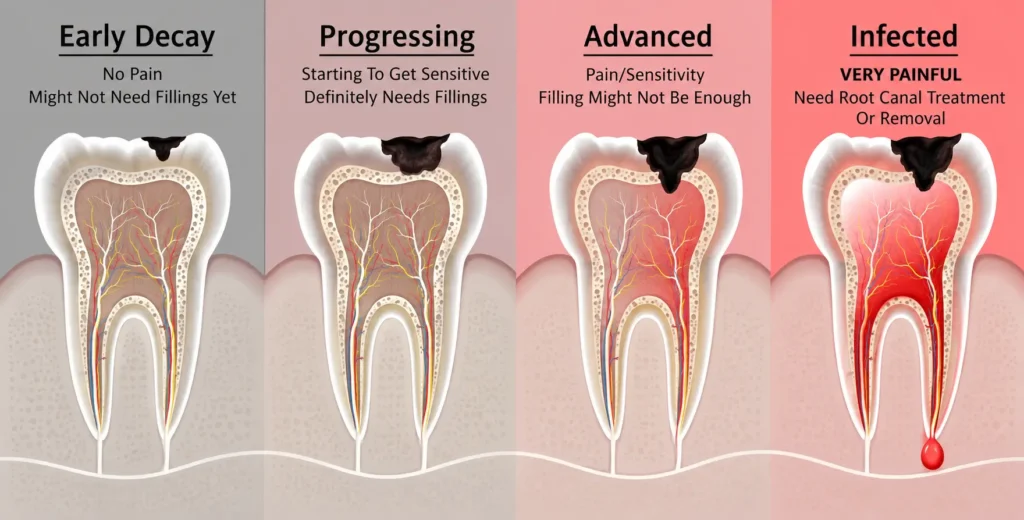
A filling is often enough when tooth decay has not reached the pulp or nerve inside the tooth. If the decay gets very close to or enters the pulp, root canal treatment may be needed. If the damage becomes too advanced or the tooth breaks badly, it may no longer be possible to save it.
Most people hear the words “root canal” and immediately feel nervous.
But in reality, root canal treatment is simply a way to save a tooth that is badly decayed or infected.
The earlier a problem is found, the easier it is to treat.
Sometimes a simple filling is enough. If the decay gets deeper and reaches the nerve, you may need root canal treatment. If it is left too long, the tooth can become so damaged that it cannot be repaired.
What Is Inside a Tooth?
Inside every tooth, there is a soft part called the pulp. This is the part that contains the nerve and blood supply.
The outside of the tooth is protected by enamel and dentine. When decay gets through these layers and gets close to the pulp, the tooth can start to become painful or sensitive.
If bacteria reach the pulp, the nerve can become inflamed or infected. At that stage, a filling alone may not be enough.
When Is Just a Filling Enough?
If the decay is small or moderate and not close to the nerve, it can usually be treated with a filling.
A filling works well when the tooth is still healthy enough inside and the nerve has not been badly affected.
In simple terms:
- Decay not close to the pulp: Usually a filling
- Decay very close to or inside the pulp: Root canal treatment may be needed
- Decay too deep, extending into the root, or a badly broken tooth: The tooth may not be repairable
A clinical examination is needed to determine how deep the decay has travelled and which treatment is suitable.
Signs You May Need Root Canal Treatment
You may need root canal treatment if you have:
- Toothache that does not go away
- Pain when biting
- Sensitivity to hot or cold that lingers
- Swelling or tenderness in the gum
- A tooth getting darker in colour
- A small pimple or boil on the gum
- Pain that keeps coming back
Sometimes, there may be very little pain at first, even when the tooth is getting worse. That is why it is always worth getting it checked early.
These symptoms do not automatically mean you need root canal treatment. A dentist will need to examine the tooth to identify the cause and recommend the right treatment.
What Happens If You Leave It Too Long?
If decay keeps spreading, it can move deeper into the tooth and down towards the root.
At first, the tooth may be treated with a filling. If the decay reaches the nerve, the tooth may need root canal treatment to clean out the infection and save the tooth. If the problem is still not treated, the decay can go even further.
The tooth may become:
- Badly infected
- Weak and brittle
- Broken down below the gum
- Cracked or fractured beyond repair
When that happens, the tooth may no longer be fixable, and the only option may be removal.
What Is Root Canal Treatment?
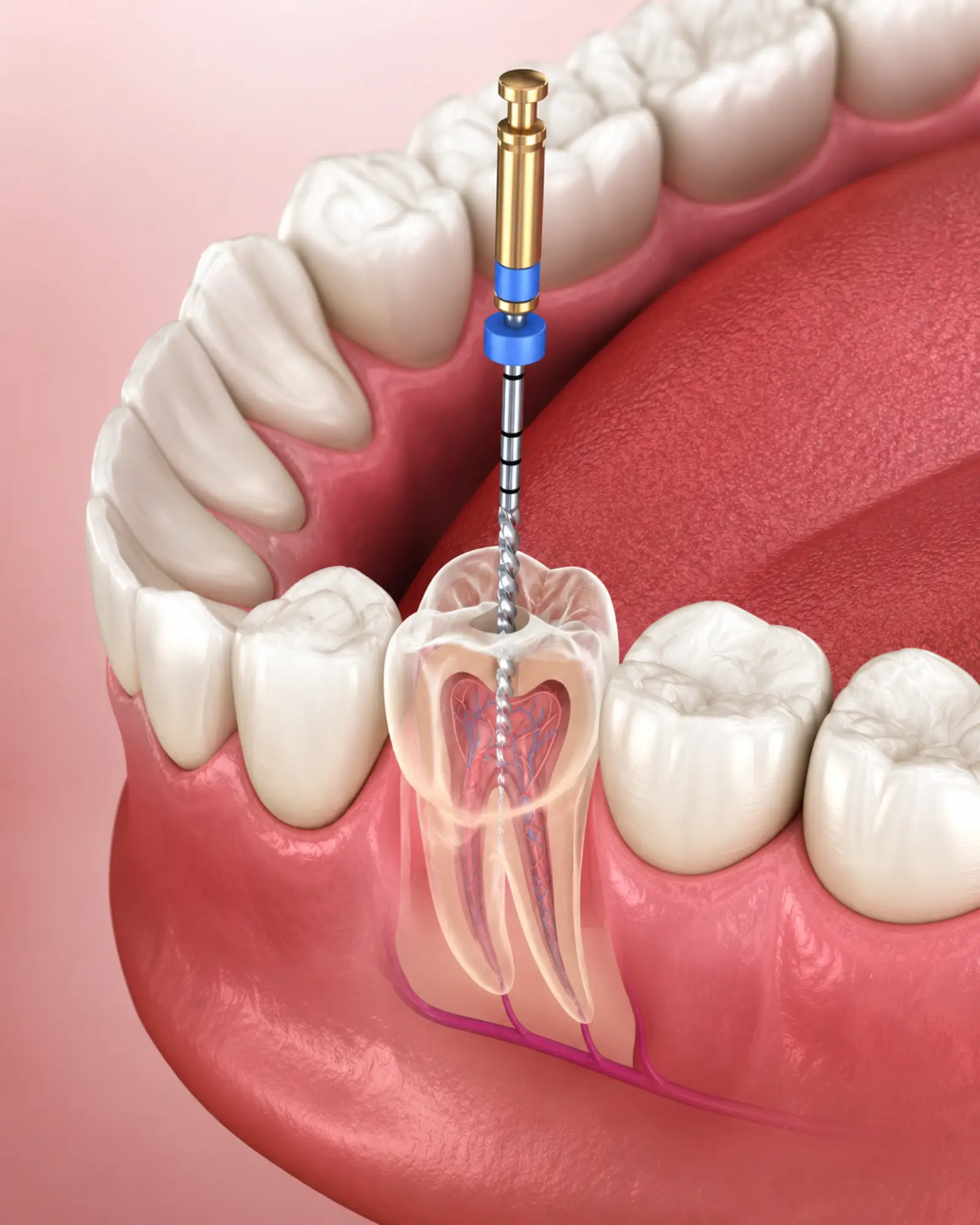
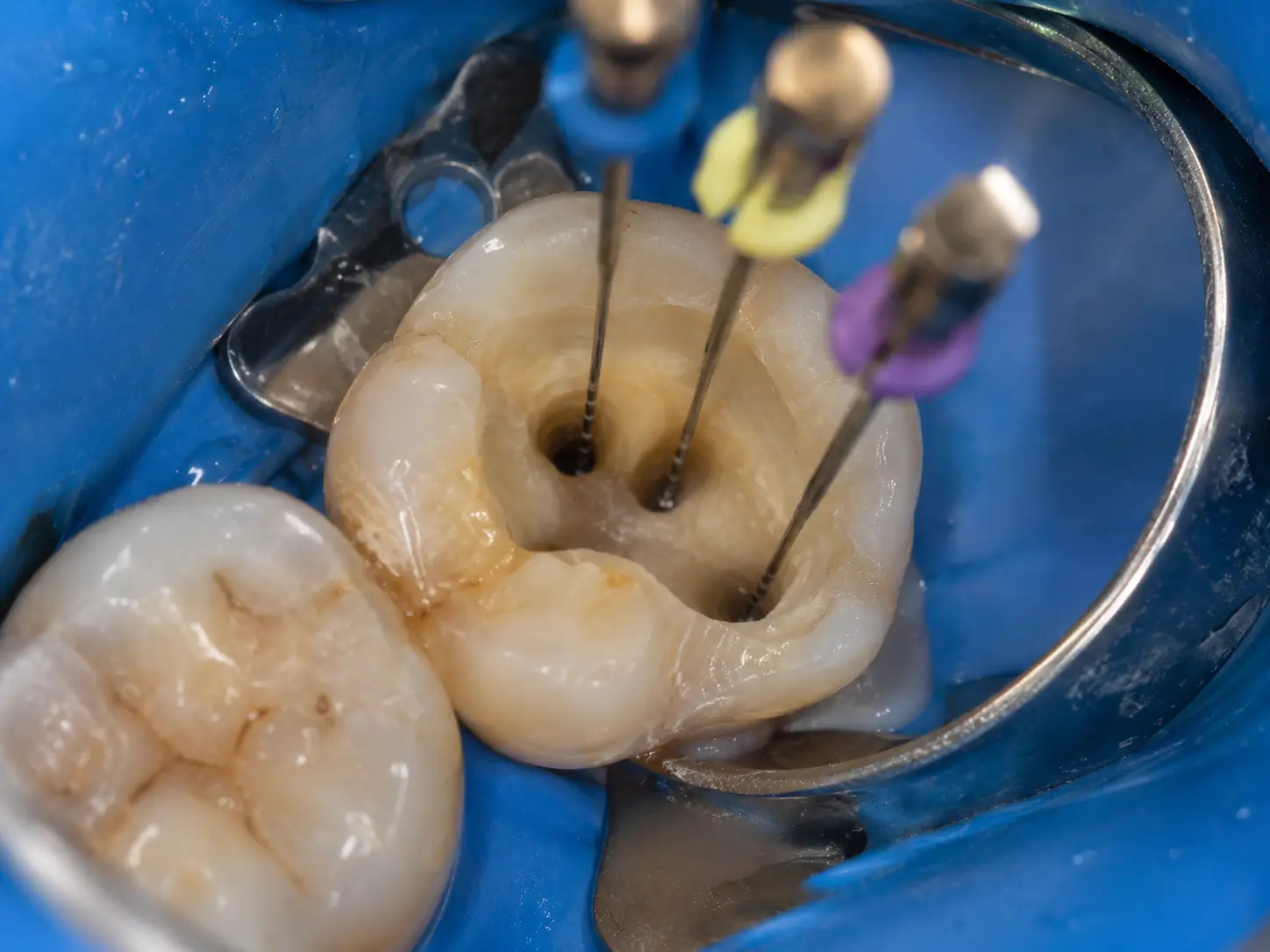
Root canal treatment is carried out to remove infection from inside the tooth and save the tooth.
During treatment:
- The tooth is numbed.
- The dentist makes a small opening in the tooth.
- The infected nerve tissue is cleaned out.
- The root canals are disinfected.
- The canals are sealed.
- The tooth is usually protected with a filling or crown afterwards.
The aim is to stop the pain, remove the infection and keep your natural tooth.
Is Root Canal Treatment Painful?
This is one of the biggest worries patients have. The truth is that modern root canal treatment is usually no worse than having a filling. The treatment itself is there to remove the pain caused by the infection.
You may feel some tenderness afterwards for a few days, but most patients feel much better once the infected nerve has been removed.
Every patient and tooth is different, so your dentist will explain what you can expect based on your individual case.
Why Saving the Tooth Is Better
If a tooth can be saved, it is usually better to keep it.
Saving your natural tooth helps you:
- Chew properly
- Keep your bite stable
- Avoid gaps
- Avoid more complicated treatment later
That is why we always try to treat the tooth early, before the damage becomes too severe.
Filling or Root Canal Treatment: The Key Message
- If decay is not close to the nerve, a filling is often enough.
- If decay gets very deep or reaches the nerve, you may need root canal treatment.
- If the decay goes too far, extends into the root or the tooth breaks badly, it may not be repairable.
The sooner a tooth is checked, the better the chance of saving it.
Specialist Root Canal Treatment at Ashtead Dental
Ashtead Dental provides access to specialist endodontic care with Dr Stefan Ciapryna, Specialist Endodontist and Restorative Dentist.
Dr Ciapryna is registered with the General Dental Council as a Specialist in Endodontics under GDC number 212910. His qualifications include:
- BDS, King’s College London
- MJDF RCS (Eng)
- Postgraduate Certificate in Contemporary Restorative and Aesthetic Dentistry
- MClinDent Endodontology, King’s College London, with Distinction
- MEndo RCS Edinburgh, with Distinction
Alongside his clinical work, Dr Ciapryna teaches and lectures in Endodontology at King’s College London. He uses an endodontic microscope when carrying out precise root canal treatment, including more complex cases.
Frequently Asked Questions
Can a dentist tell whether I need a filling or root canal treatment?
A dentist will examine the tooth and assess how deeply the decay has travelled. If the pulp or nerve has not been badly affected, a filling may be enough. If the decay has reached the pulp and caused inflammation or infection, root canal treatment may be needed.
Does toothache always mean I need root canal treatment?
No. Toothache can have different causes and does not automatically mean you need root canal treatment. A clinical examination is required to identify the cause and determine the right treatment.
Can I need root canal treatment even if the pain is mild?
Yes. Sometimes there may be very little pain at first, even when the tooth is getting worse. Lingering sensitivity, pain when biting, swelling, tooth discolouration or a small boil on the gum should be checked.
What happens to the tooth after root canal treatment?
Once the infected tissue has been removed and the canals have been cleaned and sealed, the tooth is usually restored with a filling or crown. The restoration helps protect the tooth and restore its chewing strength.
Can every badly decayed tooth be saved?
Not always. If the decay has spread too far, the tooth has broken down below the gum or it is cracked or fractured beyond repair, removal may be the only option. A dentist must examine the tooth before recommending treatment.
Don’t Ignore Tooth Pain
If you have tooth pain, sensitivity or swelling, or you think a tooth is getting worse, it is best to have it checked sooner rather than later.
Early treatment is usually simpler, more comfortable and more predictable.
Book an appointment with Ashtead Dental