Crowns and veneers can both make a tooth look better. But they do different jobs. A crown covers the whole tooth to make it strong again. A veneer covers only the front of a healthy tooth to change how it looks. So here is the simple rule. If your tooth is weak or damaged, you …

Estimated reading time: 8 minutes
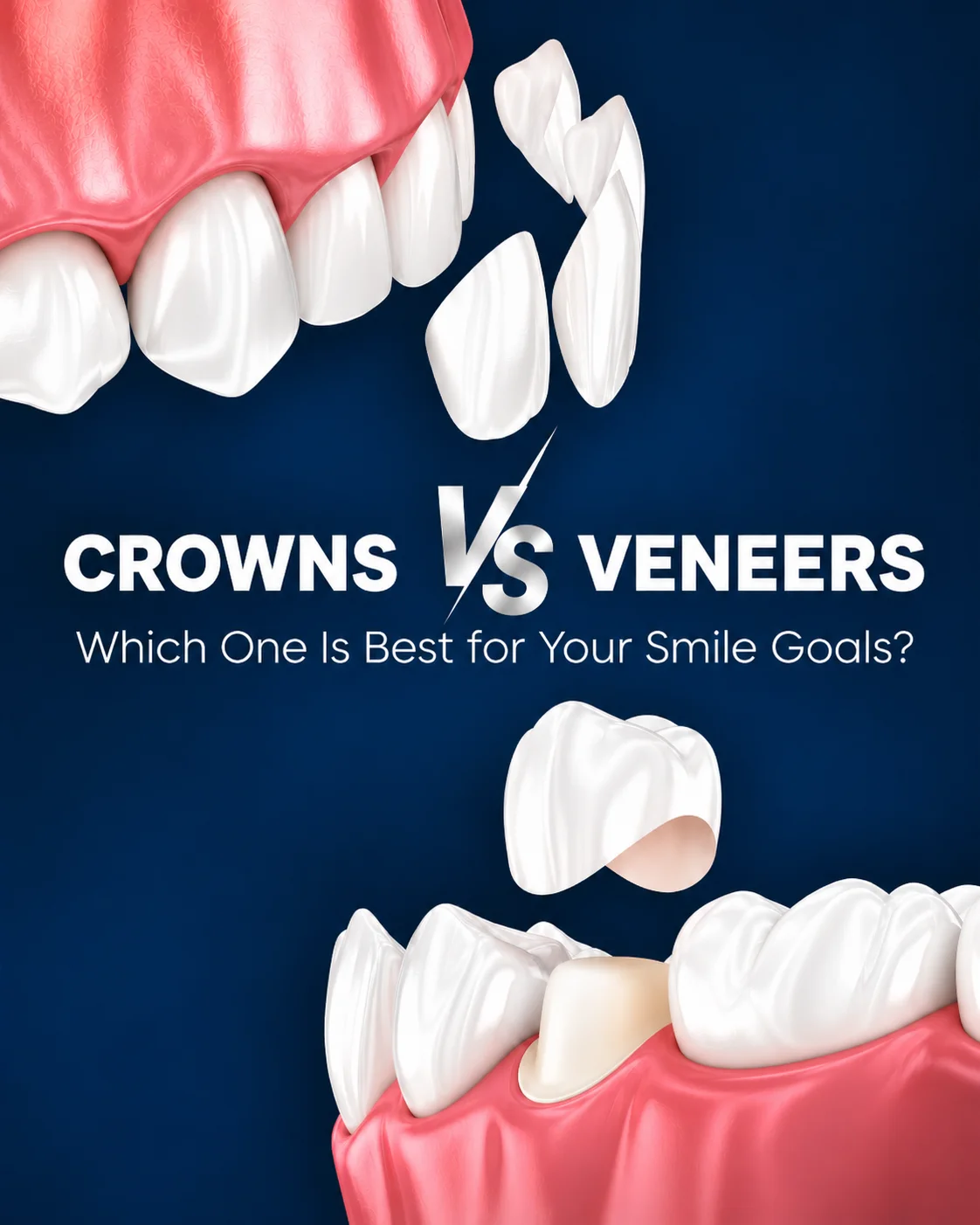
Crowns and veneers can both make a tooth look better. But they do different jobs. A crown covers the whole tooth to make it strong again. A veneer covers only the front of a healthy tooth to change how it looks.
So here is the simple rule. If your tooth is weak or damaged, you usually need a crown. If your tooth is healthy and you just want to change its colour or shape, a veneer may suit you better.
In this guide, we explain crowns vs veneers in plain words. You will learn what each one is, how much tooth your dentist removes, how long each lasts and what each costs at our private practice in Ashtead.
Crowns vs veneers: the quick answer
A crown is usually the better choice when:
- your tooth is cracked or broken
- more than half of the tooth is filling1
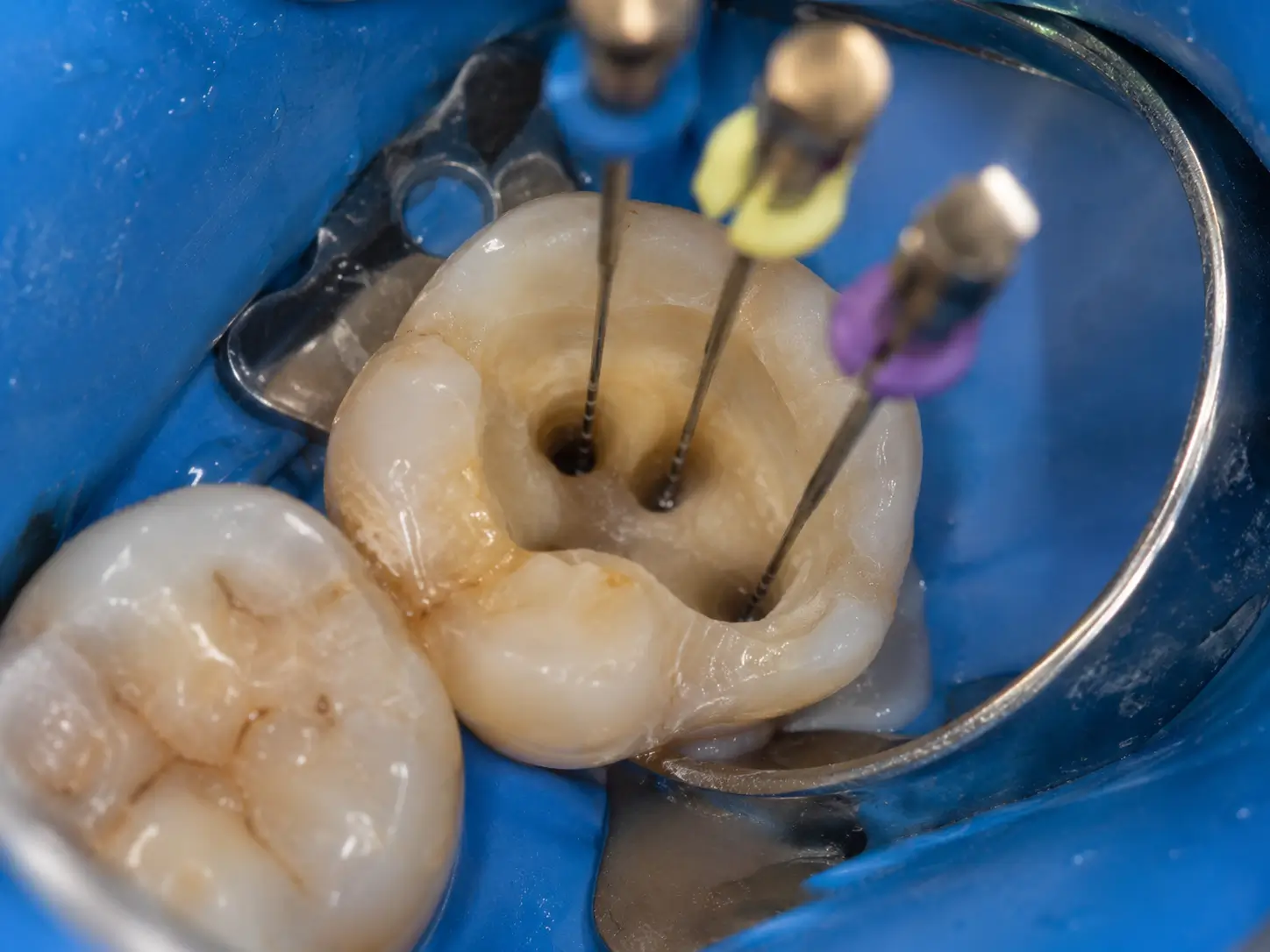
- you have had root canal treatment2
- grinding has badly worn the tooth down
A veneer is usually the better choice when:
- your tooth is healthy and strong
- you have stains that whitening cannot remove
- you have small chips, small gaps or slightly uneven teeth
- the tooth is at the front and shows when you smile
Your dentist will check your tooth before you decide. Sometimes neither is needed, and a simpler option will do the job.
Table of contents
- Crowns vs veneers: the quick answer
- What is a dental crown?
- What is a veneer?
- Crowns vs veneers: the key differences
- When is a crown the right choice?
- When is a veneer the right choice?
- Which is better for front teeth?
- Are there other options?
- What happens at your appointment?
- How much do crowns and veneers cost in Ashtead?
- How to look after crowns and veneers
- Frequently asked questions
- Not sure which you need? Talk to us
What is a dental crown?
A crown is a tooth-shaped cap. It fits over the whole tooth, right down to the gum line. Think of it as a helmet for your tooth. It holds a weak tooth together and protects it when you bite and chew.
To fit a crown, your dentist removes a thin layer from every side of the tooth. This is usually about 1 to 2mm. The crown then fills that space, so your tooth keeps its normal size.
Crowns come in different materials. Porcelain bonded to metal is strong and good for back teeth. All-ceramic, zirconia and E.max crowns have no metal, so they look more natural on front teeth.
What is a veneer?
A veneer is a thin shell that your dentist bonds to the front of a tooth. Porcelain veneers are about as thin as a fingernail. Your dentist usually removes only about 0.5mm of enamel, and only from the front.
A veneer does not make a tooth stronger. Its job is to change the colour, shape or size of a tooth you can see. That is why veneers suit healthy front teeth best.
Veneers can be porcelain or composite. Porcelain lasts longer and resists stains well. Composite is a tooth-coloured resin. It costs less, but it stains and chips more easily.
Crowns vs veneers: the key differences
| Crown | Porcelain veneer | |
| What it covers | The whole tooth | The front surface only |
| Main job | Strengthen and protect | Improve how the tooth looks |
| Tooth removed | About 1–2mm from every side | About 0.5mm from the front |
| Best for | Weak, cracked or root-treated teeth | Healthy front teeth |
| How long it lasts | Often 15 years or more with good care | Often 10-15 years with good care |
| Visits needed | Usually 2 | Usually 2 |
| Price at Ashtead Dental | From £650 per tooth | From £750 per tooth |
| Can it be undone? | No | No |
When is a crown the right choice?
A crown is the right choice when a tooth needs strength more than a new look.
- After root canal treatment. A tooth that has had root canal treatment can become brittle. A crown stops it cracking, especially on back teeth. You can read more in our guide to [the signs you need root canal treatment].
- A very large filling. When a filling takes up most of the tooth, the walls around it are thin. A crown holds them together.
- A cracked or broken tooth. A crown wraps the crack so it cannot spread when you bite.
- Heavy wear. Grinding can wear teeth flat. A crown rebuilds the height and shape.
- Too little tooth left for a veneer. A veneer needs healthy enamel to stick to. If that is missing, a crown is the safer option.
When is a veneer the right choice?
A veneer is the right choice when the tooth is healthy but you are unhappy with how it looks.
- Stains that will not shift. Some stains go deep inside the tooth. Whitening cannot reach them, but a veneer covers them.
- Small chips and uneven edges. A veneer gives the tooth a smooth, even shape.
- Small gaps. Veneers can close small spaces between front teeth.
- Teeth that look short or small. A veneer can add length and balance your smile.
Veneers may not suit you if you have untreated decay or gum problems. Your dentist will treat these first. If you grind your teeth, you may need a night guard to protect your veneers.
Which is better for front teeth?
Both can work well on front teeth. The answer depends on how much healthy tooth you have left.
If the front tooth is healthy, a veneer saves more of your natural tooth. If it is cracked, heavily filled or root-treated, a crown is stronger. Some people have both. For example, you might have a crown on one damaged tooth and veneers next to it. Your dentist matches the shade so they all look the same.
Are there other options?
Yes. You may not need a crown or a veneer at all.
- Teeth whitening can lift surface stains and general yellowing.
- A hygienist clean removes stains from tea, coffee and red wine. See [how often you should see a hygienist].
- Composite bonding adds tooth-coloured resin to fix small chips and gaps. It needs little or no drilling. It costs less but usually lasts fewer years.
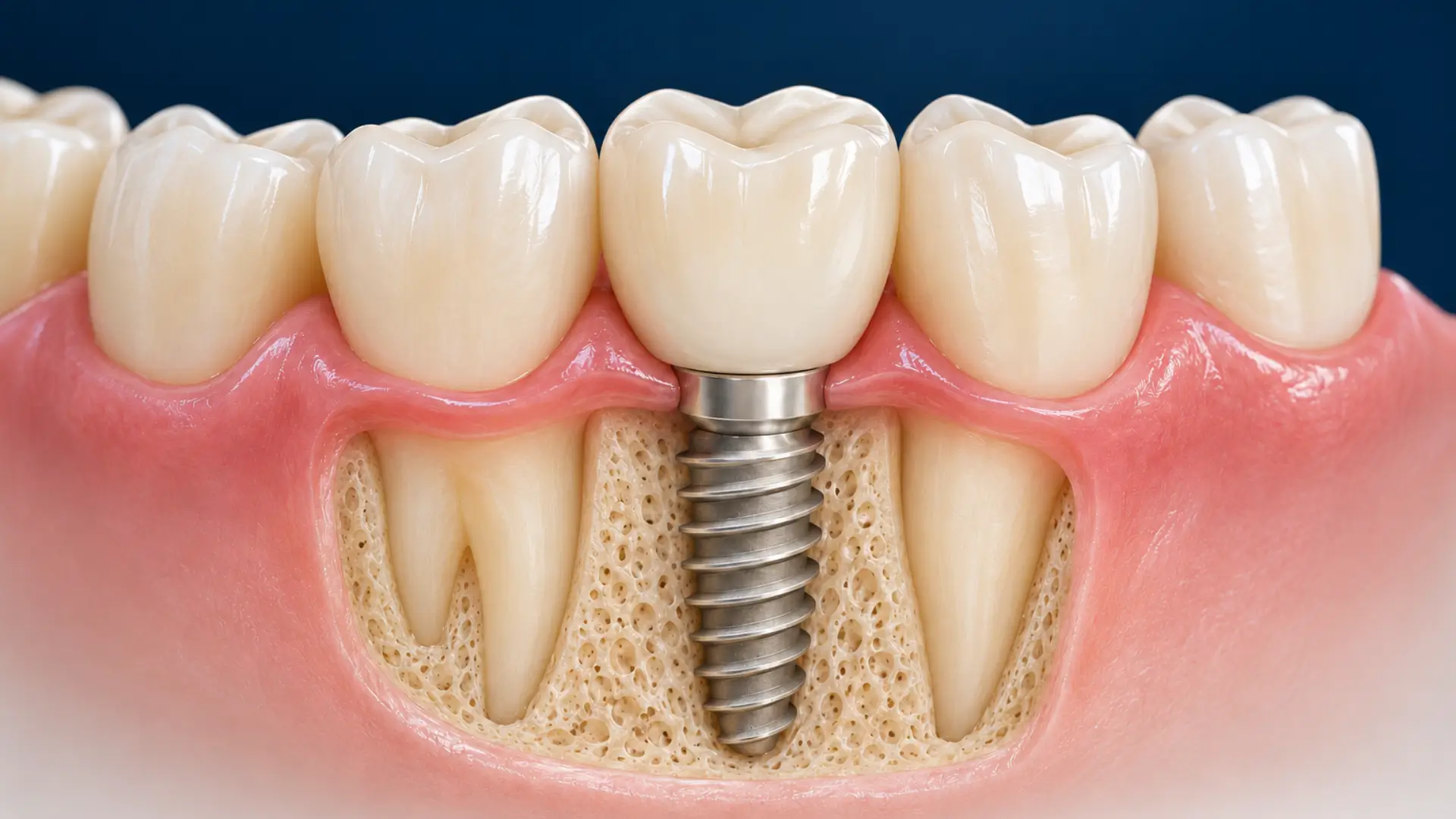
- A dental implant replaces a tooth that is too damaged to save. Read [how long dental implants last].
If you plan to whiten, do it before you get a crown or veneer. Crowns and veneers do not change colour with whitening, so your dentist matches them to your whitened shade.
What happens at your appointment?
- Check-up and chat. Your dentist examines your teeth and gums, checks your bite and takes X-rays if needed. They explain your options and the price.
- Preparing the tooth. Your dentist numbs the area and gently shapes the tooth. They take a scan or mould. You leave with a temporary crown or veneer.
- Making it. A dental lab makes your crown or veneer to fit your tooth. This usually takes about 2 to 3 weeks.
- Fitting. Your dentist removes the temporary, checks the fit, bite and colour, then fixes the new one in place.
Does it hurt? Your dentist uses local anaesthetic, so you should not feel pain during treatment. Your tooth may feel a little sensitive for a few days afterwards. This is normal and usually settles on its own.
How much do crowns and veneers cost in Ashtead?
| Treatment | Price |
| Porcelain bonded crown | From £650 |
| All-ceramic or zirconia crown | From £750 |
| Layered zirconia crown | From £850 |
| E.max crown | From £950 |
| Porcelain veneer | From £750 per tooth |
| Composite bonding | From £250 per tooth |
| New patient check-up | £85 |
These are starting prices. You get your final price after your dentist has examined your tooth, so there are no surprises. Finance is available, and payment plans may be available on request. See our full price guide.
How to look after crowns and veneers
Crowns and veneers last longer when you look after them. The good news is that the care is simple.
- Brush twice a day with fluoride toothpaste.
- Clean between your teeth every day, especially near the gum line.
- Do not bite ice, pens or bottle tops.
- Wear a night guard if you grind or clench your teeth.
- Keep up your check-ups and hygienist visits.
The tooth under a crown can still decay at the edge. Regular check-ups help your dentist spot problems early.
Frequently asked questions
Do crowns or veneers last longer?
Crowns usually last longer because they cover the whole tooth. With good care, many crowns last 15 years or more. Porcelain veneers often last 10 to 15 years.
Can I have a veneer on a tooth with root canal treatment?
Usually not. A root-treated tooth can become brittle, so it needs the full protection of a crown. Your dentist will check your tooth and advise you.
Can I whiten crowns or veneers?
No. Whitening does not change their colour. If you want whiter teeth, whiten first. Your dentist then matches your crown or veneer to your new shade.
Are crowns and veneers permanent?
Yes. Your dentist removes some enamel, and enamel does not grow back. So you will always need a crown or veneer on that tooth. One day, you may need to replace it.
Does getting a crown hurt?
No. Your dentist numbs the tooth first. You may feel some mild sensitivity for a few days afterwards.
Can I have veneers if I grind my teeth?
Possibly. Grinding puts extra pressure on veneers. Your dentist may suggest a night guard or recommend crowns instead.
Not sure which you need? Talk to us
The best way to choose between a crown and a veneer is a proper check. At Ashtead Dental, we look at your tooth, explain your options in plain words and give you a clear price before any treatment starts.
Call us on 020 7101 3777 or WhatsApp +44 7446 197187 to book a check-up. You can find us at 206 Barnett Wood Lane, Ashtead KT21 2DB. We welcome patients from Ashtead, Leatherhead, Epsom and nearby.
Key Takeaways
- Crowns cover the entire tooth and provide strength, while veneers only cover the front to enhance appearance.
- Choose a crown for weak or damaged teeth and a veneer for healthy teeth needing cosmetic improvements.
- Crowns typically require removing 1-2mm of tooth enamel, whereas veneers require only about 0.5mm.
- Crowns last longer (15+ years) compared to veneers (10-15 years) with proper care.
- Consult your dentist for the best option based on your dental condition and aesthetic goals regarding Crowns vs Veneers.
‘